Spatio-Temporal Statistics & AI Seminar
Featuring Noel Cressie, Distinguished Professor of Engineering and Information Sciences and Distinguished Professor of Statistics in the School of Mathematics and Applied Statistics at University of Wollongong, Australia
When: Sept. 25, 2026, at 3 p.m.
Where: Tate Hall, Room 022, on the Mizzou campus
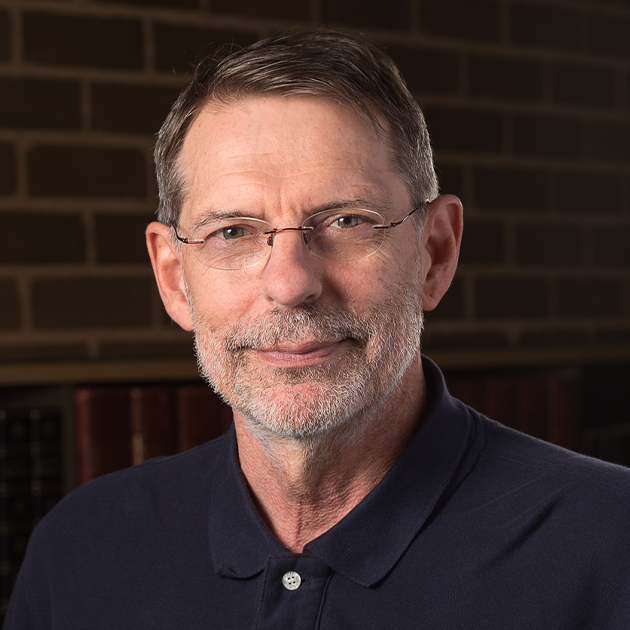
Noel Cressie will share emerging research on Fourier neural operators and their potential to improve forecasting of complex environmental and physical processes.
On Sept. 25, 2026, the Center for Spatio-Temporal Statistics and AI will host internationally recognized statistician Noel Cressie for a research seminar examining new approaches to modeling and forecasting processes that evolve across space and time. During the presentation, Cressie will share recent work exploring the use of Fourier neural operators, an artificial intelligence technique that can learn complex patterns from data and efficiently model dynamic systems without requiring explicit knowledge of the mathematical equations that govern them.
The talk will demonstrate how Fourier neural operator-based models can capture intricate spatio-temporal relationships in phenomena such as sea surface temperatures and precipitation patterns. Attendees will learn how these approaches compare with leading statistical forecasting methods and how they may improve predictions in complex environmental and scientific applications.
The seminar will offer faculty, students and researchers an opportunity to explore a rapidly evolving area of research that bridges statistics, data science and artificial intelligence. By highlighting innovative methodologies for forecasting and understanding dynamic systems, the presentation will showcase how advances in computational and statistical modeling can help address increasingly complex scientific questions.
Cressie is widely regarded as one of the pioneers of modern spatial and spatio-temporal statistics. During a career spanning decades in the United States and Australia, he has secured more than $20 million in research funding, authored hundreds of scholarly publications and helped develop statistical methods that make large-scale spatial and spatio-temporal modeling feasible for modern data-intensive applications. His work has contributed to advances in environmental monitoring, remote sensing and the analysis of complex Earth-system processes.
As the Center for Spatio-Temporal Statistics and AI continues to bring leading scholars to Mizzou, seminars such as this one provide valuable opportunities for the university community to engage with emerging ideas and cutting-edge research. The event will foster discussion around the future of spatio-temporal modeling and forecasting while connecting students and researchers with one of the field's most influential voices.